Showing posts with label Entrepreneurship. Show all posts

Thursday, 4 August 2016

Motivation


Hey everyone!

I know it’s been a while, but I’m back for another semester of Global Challenges, which means another 12 weeks of blogging fun! Starting today, I’ll be posting every two weeks, exploring a bunch of my thoughts and experiences around entrepreneurship. Hopefully the insights that emerge will be relevant and at least a tiny bit helpful to you, whether or not you consider yourself an entrepreneur.

Today I want to talk about motivation. It’s a relatively crucial prerequisite for achieving just about anything, so I think it’s worth spending a few hundred words on. I’ll try not to ramble.

We all find ourselves lacking motivation at some point. It’s a fact of life. We rediscover our mojo eventually, but we’re not sure how, or what we should do differently next time. I don’t think there’s a silver bullet, but from personal experience I’ve learned that spending time with the right people can make a huge difference.
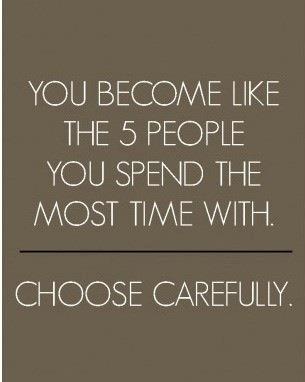

From here


On Tuesday night, Global Challenges students across the three cohorts were lucky enough to hear from the incredible Ian Mason: an entrepreneur, Y20 delegate, and all-round fantastic guy. He’s not a ‘motivational speaker’, but I left the dialogue that night feeling inspired, reinvigorated, and ready to tackle the adventures that lay ahead.

Don’t go thinking it needs to be a big event you attend, or an accomplished speaker you hear from. A conversation with a parent or friend can often give you the boost you need. 
When I’m feeling tired, stressed and a bit lost, my instinct is to keep to myself, and wade through my problems alone. That (almost) never helps. I find myself dwelling on my lack of productivity and motivation rather than doing something about it, and I close myself off from anyone who might be able to offer support.

To break away from my default response, I try to spend an hour with a friend each day, and in that hour I focus on them; giving myself a break from the pressure and guilt of whatever I need to get done that day. Check out the Conversation section of my post about meditation if you want a bit more detail on the power of a good chat.

It might seem like this mindset puts the responsibility for your motivation on others, but that wouldn’t be fair. It’s up to you to surround yourself with the right people, and be open to the support they offer. Both of those things are a lot harder than they sound, and I’m not an expert in this field by any stretch of the imagination, so you might want to do some further research. I’d suggest starting with this article from Forbes, or the fantastic book 'Mindsight', if you’re up for a longer read. 

Let me know in the comments section below if there are any other resources that help you stay motivated!


From here


Sunday, 15 May 2016

Living for the Present

Pop the myths about RedBalloon with Josh Zail


Mission (The Why):


RedBalloon’s mission is to “discover and deliver the best personalised experiences and gifts that inspire people to give, share and live.” They pioneered experiential gifting in Australia , bringing to life the notion that incredible experiences bring more happiness than a wrapped box.

Selling happiness is a great strategic move, but with RedBalloon it’s not a hollow platitude. Founder Naomi Simson is “committed to making the world a happier place”, and RedBalloon’s products are specifically chosen to deliver maximum happiness. This is a company with a clearly defined purpose and vision, which makes it a company worth talking about.   
                             

Everyone loves happiness


Philosophy (The How):


RedBalloon are known for their experience vouchers, and those vouchers are the engine of their mission, representing their core philosophy of giving, sharing and living. “Moments that start with RedBalloon stay with you forever” reads their Instagram tagline, and by delivering unique and challenging experiences, RedBalloon ensures that the moments it delivers to its customers become cherished memories.


Legal Structure (The What):


RedBalloon Pty Ltd is a Proprietary Limited Australian Private Company. Since my last post was about a charity , I’ll give you a quick refresher on the legal jargon.  RedBalloon is a company owned by a small number of ‘shareholders’, and doesn’t sell its shares to the public. And it’s Australian. Yay.


Stuff it does (The More Interesting What):


RedBalloon sells presents. But not just any presents. From skydiving and riding in a supercar to spa treatments and wine tasting masterclasses, there’s an experiential gift for everyone! I’m trying really hard not to sound like an ad here, but it’s tough to describe the experiences without getting a little bit excited.


Tell me that doesn't look like fun


The website contains enough details to satisfy even the most neurotic shopper. For each experience you’re told ‘Why you’ll love this’, ‘what’s included’ and exactly what you’ll need to do ‘On the Day’ .

RedBalloon even suggests ‘Gift Ideas’ to suit any recipient, price range and occasion. The suggestions include experiences and products, and my favourite department is the ‘Personalised Gifts’, where you can make your mark on everything from a box of chocolates to a set of golf accessories.
They've made shopping for gifts so easy it’s actually fun, when typically, the process of finding and purchasing a great present can be a daunting task, especially around the holiday season.


What they do well:


RedBalloon doesn’t advertise, at least not like most companies. They now feature on Facebook, Instagram, Flickr, and Twitter, but they’ve never been big on traditional advertising media like TV, radio, newspapers or billboards. So what was their marketing strategy before the social media era?

Word of mouth. No other company I’ve seen has done so much with this age-old medium as RedBalloon. Today, despite their extensive digital marketing campaigns, RedBalloon still relies heavily on word of mouth. Creating an incredible customer experience has been the centrepiece of their strategy from the start, and that’s what gets people coming back for more, and raving to anyone within earshot.


Whatever the experience, RedBalloon makes sure you have a bucket of fun 


Room for Improvement:


Although all of the experiences look incredible, I think RedBalloon could do better at the budget end of the spectrum. The cheapest one I could find was a Half Day Caving Experience at $80, which is probably great value, but still a fair bit of money. I think if they expanded their offering of budget options, RedBalloon could capture a lot more business from the cash-strapped university student demographic who want to impress with a gift, but are reluctant to part with $80.


Opportunities (Exciting stuff on the horizon):


RedBalloon launched operations in New Zealand only a month ago, yet they’re already sizing up their prospects in a much bigger market: Asia. Their business model relies on offering a wide range of high-quality experiences, which means they’ll need to form relationships with plenty of reputable tourism providers in the area. They’ll need to recruit some local know-how to help them navigate the foreign terrain, but they’ve already practiced the technique, hiring a former tourism NZ employee to head up Products and Partnerships across the Tasman. If they can build a team with the right expertise and connections to cultivate a reliable network in Asia, the potential windfall is huge.


Unfair Advantage (why it deserves an entire blog post):


RedBalloon value and respect their customers and their employees, treating them as people, rather than assets or statistics. Named in the top 50 ‘Best Places to Work’ in Australia from 2009 to 2015, and last year becoming the first Australian company to make the international list of Most Freedom-Centered Workplaces, RedBalloon gets ahead by valuing its people.


RedBalloon employees are encouraged to put their unique personalities into their work. 


RedBalloon’s commitment to people courses through the company’s DNA and finds expression in every facet of their operations, from the way they treat their staff, to the products they deliver, their focus on customer experience, and their mission to provide ‘good times’ and incredible memories.


Final Thoughts:


With the benefit of hindsight, RedBalloon seems like a genius idea, but when it was founded, it represented a quantum leap in gift methodology, and a huge associated risk. Naomi Simson and the team at RedBalloon have passed the startup test with flying colours, and I can’t wait to see where this exciting enterprise floats off to next. 

Thursday, 28 April 2016

Australia’s First Social Enterprise

Take a tour of The Big Issue with Josh Zail


Mission (The Why):      


The Big Issue was Australia’s first social enterprise, and its mission is to improve the lives of the homeless, marginalised and disadvantaged.


Philosophy (The How):


The Big Issue empowers and engages disadvantaged Australians with a range of job opportunities and support programs. It doesn't rely on government funding or private donations, and it doesn't encourage the people it helps to rely on handouts. The Big Issue has a simple yet profound philosophy: “We help people help themselves.”  


Legal Structure (The What):


Big Issue In Australia Limited is an Australian Public Company, but more importantly, it’s a charity. If you want to get specific, it’s a ‘Public benevolent institution’ and an organisation ‘Advancing social or public welfare’, but I think we’ll stick with ‘charity’ to keep things simple.

While ‘Social Enterprise’ is a label a company may use to describe itself, it’s important to understand that ‘charity’ is a legal term, and a company has to fulfil strict criteria in order to register as a charity in Australia.

1. The company must be a not-for-profit, meaning it isn’t run for the benefit of the company members, directors or other shareholders.

2. It needs to have a ‘charitable purpose’ from the specified list of 12.

3. Its charitable purpose has to provide some sort of benefit to the wider community/general public.

4. It needs to fulfil a bunch of administrative rules, including compliance with the governance standards, having an ABN, not being a political party and not being involved in criminal activities.


Stuff it does (The More Interesting What):


The Big Issue Magazine was the first social enterprise in the Big Issue family, and is probably the most widely known. It’s a fortnightly magazine sold by homeless and disadvantaged people on the streets of Australian cities. A copy costs $7, and half of that goes directly to the vendor. More than 9 million copies have been sold on the streets of Australia in the magazine’s 20-year history!


Following on from the success of the Magazine, The Big Issue Women’s Subscription Enterprise  provides employment for homeless and marginalised women, packing copies of the Magazine for distribution to subscribers.

The impressive list of social enterprises that have been launched by The Big Issue goes on, from the Community Street Soccer Program to The Big Issue Classroom and The Big Idea.


What it does well:


­The Big Issue is the perfect example of a social enterprise having positive impact while doing business, rather than earning a stack of money doing business, then creating social impact by giving some of it to charity.

When The Big Issue succeeds from a business perspective, it’s achieving its social mission: the homeless, disadvantaged and marginalised benefit directly. It’s an ideal alignment of the economic and social missions; the enterprise doesn’t have to neglect one in order to further the other. The Big Issue has cleverly negotiated two of the biggest challenges faced by every social enterprise, putting it in prime position to lend a hand to those who need it most.


Opportunities (Exciting stuff on the horizon):


The Big Issue just keeps growing, heading off in new directions but always staying true to its mission. One exciting new project is Homes for Homes, which deviates from the path of providing employment to the disadvantaged, but I think that it has potential for huge impact. This video is much more interesting than my rambling, so I‘ll just let you watch it now… 


Unfair Advantage (why it deserves an entire blog post):


A few weeks ago, I bought a copy of The Big Issue Magazine. I bought it because I felt sorry for the vendor, and I wanted to do some good. I shoved it into my backpack, satisfied that I’d done my good deed for the day, and immediately forgot about it.

Yesterday I spotted it hiding in the corner of my bedroom and, since I was writing a blog post on the enterprise, figured it couldn’t hurt to have a read. I was blown away by the quality of the articles, and the overall professionalism of the magazine. This is The Big Issue’s Unfair Advantage. There are plenty of companies that produce riveting magazines, and quite a few that have real social impact, but only The Big Issue can do both. 

The quality of the Magazine makes perfect sense given that social benefit is maximised when business is booming, yet it still surprised me. Reader Kath Jones captured it pretty well when she posted on The Big Issue facebook page “Thank you TBI, you improve the lives of more than just your vendors.”


Final Thoughts:


The Big Issue is just a magazine, and yet somehow it’s so much more. When you buy the Big Issue it’s not about purchasing a magazine, it’s a chance to Meet the vendors, Play some street soccer, Learn in a classroom workshop, and Change a life. It’s a great read, and an opportunity to get involved with an organisation that’s having real impact. Now that’s a social enterprise.


Thursday, 24 March 2016

Cloudy with a chance of Innovation

Explore CliniCloud with Josh Zail


Mission (The Why):

CliniCloud's mission is making quality healthcare accessible and efficient, particularly for treatment of the most common medical conditions. The problem? A cough or wheeze might just be a symptom of the common cold, or it might be a sign of something more serious. You’ve got three options:
    
    1.  Book an appointment, trek to the doctor’s office, wait in the waiting room, eventually see a doctor.
       
2. Rush to the ER in a panic. It’s probably unreasonable to be this panicked, but you’re freaking out anyway.
  
         3. Google your symptoms and treat yourself, with zero input from a medical professional. Not the greatest idea in the world.

The Solution?

CliniCloud!


Philosophy (The How):

CliniCloud cofounders Andrew Lin and Hon Weng Chong believe that technology is the key. They’ve been friends since medical school, and dived into the entrepreneurship world for the first time when they came up with the basic idea for CliniCloud in 2012. But they didn’t invent the most accurate thermometer in the world, or the most cutting-edge stethoscope ever seen. 

Lin and Chong with their inventions


They designed and built devices that are simple to use, and record measurements straight to your smartphone. The CliniCloud app manages your vital signs recordings, allowing you to label, store or share them with a doctor. CliniCloud partners with Doctor on Demand in the US for video consultations with physicians, but here in Australia we have to get by with texting or emailing our recordings to our GP.  

Everything that Clinicloud does has the aim of building a partnership between patients and doctors with shared responsibility and hassle-free communication.


Legal Structure (The What):

CliniCloud is a Proprietary Limited Australian Private Company. In case you’ve forgotten since my last post, that means it’s a business owned by a small number of ‘shareholders’, and doesn’t sell its shares to the public. And it’s Australian. If you think you’re going to forget again, maybe you should write that down.


Stuff it does (The More Interesting What):

The Connected Medical Kit is CliniCloud’s flagship product, bringing a digital stethoscope and a non-contact thermometer together in a stylish case for easy transport. 

Now that's sleek!


The kit will set you back 149USD, but the app is free for both Apple and Android. If you don’t have a smartphone, you’ll have to go buy one first. Cost varies across the board, although I am looking to sell my old Samsung Galaxy S4 for a very reasonable price. Comment if interested.

The stethoscope and thermometer seem very easy to use, they’re not scary and confusing like you might expect from diagnostic medical instruments. As someone who loves figuring out a new piece of technology without any interference from a pesky instruction manual, I think they actually look pretty fun to use. See for yourself!


What they do well:

Having practiced in hospitals in the early days of CliniCloud, Lin and Chong clearly have a deep understanding of their key customer segment: young parents. They’ve witnessed the anxiety and frustration of late-night trips to the ER, and realised that technology has the potential to reinvigorate the system and improve outcomes for patients and doctors.

CliniCloud offers parents peace of mind and can help avoid a time-consuming and stressful trip to the doctor’s office or ER. If an in-person consultation is required, the parents can provide the treating doctor with their recordings. 

That’s pretty valuable, as temperature and respiratory data over an extended period of time usually lead to a more accurate and quicker diagnosis than a one-off examination.
It also saves families money, and gives doctors more time to focus on serious conditions without having to sift through all the simple cases.


Room for Improvement:

Data security and accuracy of the instruments loom as major technical challenges for CliniCloud, but I’m going to talk about a more human issue. 

Minimising hollow buzzwords and promises to 'change everything' year after year helps with the credibility required for marketing a medical product, but I think the language on their website, specifically the blog section could be a little tighter, make the ‘sleek tech’ branding more holistic by talking a bit more like a bigtime tech company.


Unfair Advantage (why it deserves an entire blog post):

CliniCloud differentiates itself from similar companies with their hardware’s simple, elegant design. It makes customers feel like they know how to use it already, and that’s a big deal. The kit is an attractive piece of technology, and its user-friendly design makes me feel like I’d look cool and have fun using it.
Lin and Chong have cleverly aligned their product with today’s culture of health and fitness tracker apps, while maintaining the legitimacy required for a customer to trust a company with their personal medical issues.

Fun for the whole family!


Final Thoughts:


CliniCloud brings patients and doctors together in a way that I haven’t seen in any other enterprise. Lin and Chong have managed to demystify and unclutter the process of obtaining quality medical advice, and engage patients in their own family’s care. I haven’t decided if I’m going to buy a Connected Medical Kit just yet, but I’m definitely looking forward to seeing where CliniCloud go from here!

Thursday, 10 March 2016

You Can't Spell 'Entrepreneurship' Without Entrepreneurs - delve into The Entourage with Josh Zail


Mission (The Why)

The Entourage is all about teaching entrepreneurship to young aspiring entrepreneurs, providing tools and advice that work in the real world. They are big on values, with 10 short and sweet mantras such as “Take Initiative. Don’t Wait” and “Do More With Less, Become a Master of Leverage”. They all fall under the umbrella of “Inspire freedom, enable greatness, change the world.”

Philosophy (The How)

­Entourage founder Jack Delosa strongly believes that entrepreneurship should be taught by successful entrepreneurs, people with a 'been there done that' experience. Jack doesn’t think that universities are able to keep up with the pace of change in the world of entrepreneurship. Everything that The Entourage does has the aim of educating and creating a community of capable and passionate entrepreneurs.

 Legal Structure (The What)

The Entourage Education Group is a Proprietary Limited Australian Private Company. In English, that means it’s a business owned by a small number of ‘shareholders’, and doesn’t sell its shares to the public. And it’s Australian. Cool.


Stuff it does (The More Interesting What)

The Unconvention is Entourage’s cornerstone event, a one-day carnival of big-name speakers and outcome-orientated workshops that celebrates entrepreneurs who do business unconventionally. It’s likely that the words ‘disrupt’ and ‘innovate’ will be mentioned more than once, but the Unconvention is a lot more than buzzwords and hype. More on that in a minute.

The Entourage offers a range of education products, from the Diploma of Business (specialising in entrepreneurship) to the Launch program, Build Program and Scale Program. Each of these is tailored to a different stage in the entrepreneurship journey, but they’re all driven by the core ideas of learning from people with plenty of experience in the arena, and getting out into the real world to make your business happen. Becoming a member of The Entourage is free, although enrolling in one of its programs or attending the Unconvention requires payment.

 What it does well

Throwing aspiring entrepreneurs and hugely successful founders into the same room spreads knowledge sharing, but more importantly it spreads passion, and lays the foundations for meaningful networks. I’m studying entrepreneurship at uni this year (sorry Jack), and I’ve already discovered that starting a business is really, really hard. Stuff goes wrong every 5 minutes, the pressure is relentless, and motivating yourself can quickly become an uphill battle.

Sharing your passion means that it’s still alive even when you’re having a rough day- it multiplies and expands and energises everyone it touches. Having a network of people who have experienced similar struggles can be the difference between sticking with your start up against all odds and throwing in the towel like a boring, rational human being.

From the Unconvention to the full-length education programs, The Entourage is constantly getting entrepreneurs together to learn from each other and create a supportive community, and I think that’s its core strength.

Room for Improvement

In my opinion, weaknesses are almost impossible to find when it comes to The Entourage, but I do think that by marketing to ‘entrepreneurs under 40’ they alienate older aspiring entrepreneurs that may share the mindset and appetite for learning of their younger counterparts. I understand the youthful and dynamic brand is very important to The Entourage, but I think people over 40 are equally capable of risk taking and innovation.

Opportunities (Exciting stuff on the horizon) 

It’s not hard to see that this enterprise works hard to integrate its 10 core values into every move it makes. “Live on the extra mile, good enough isn’t good enough?” reads one of my favourites, and this mantra drives The Entourage’s push to become a nationally-accredited Higher Education Provider in 2018, meaning it’s taking a giant step toward becoming an actual university. This might seem a touch hypocritical given Jack’s comments about the pitfalls of universities, but I think it’s a bold move that has the potential to boost The Entourage’s credibility, effectiveness and reach.


Unfair Advantage (Why it deserves an entire blog post)

Although The Entourage’s more obvious Unique Value Proposition is in the education department, I think its unfair advantage is the community factor.
Everything about The Entourage feels personal, differentiating it from the   production-line student experience stereotype that most education institutions face. The Entourage is all about having fun. It reminds you to enjoy the journey of entrepreneurship, a journey renowned as one of the most demanding and unforgiving career paths. 

Plastered across its website are photos of people brimming with passion and excitement, along with video interviews with satisfied Entourage graduates.


My favourite part of The Entourage’s digital profile is AskJackD, a video blog where Jack answers questions sent in by budding entrepreneurs. I think this episode encapsulates the purpose of AskJackD, and touches on The Entourage’s unique aura.


A thoughtful and inspiring blog.

Onesie day at the Entourage Office


 The Australian Startup Awards


The Entourage’s playful community spirit intertwines with its educational philosophy of person-to-person learning. Sharing of expertise and passion generates both at a phenomenal rate, and that’s why I can’t wait to see where The Entourage goes from here.